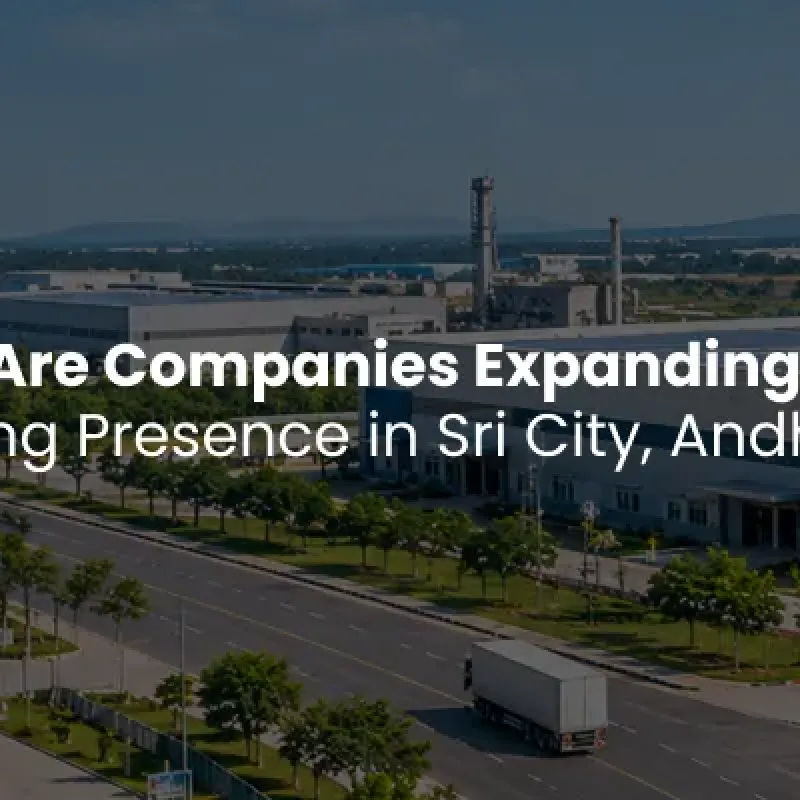
Why Are Companies Expanding Their Manufacturing Presence in Sri City, Andhra Pradesh?

Summary
Companies are expanding their manufacturing presence in Sri City, Tirupati, Andhra Pradesh because of its strategic NH-16 location, access to major ports and airports, specialised industrial zones, and well-developed infrastructure. Its dedicated Free Trade and Warehousing Zone (FTWZ) further supports efficient storage, logistics and supply chain operations, making it an attractive industrial destination.
Manufacturing companies today look beyond land availability when selecting an industrial location. They prioritise connectivity, access to suppliers, port infrastructure, reliable utilities and warehousing facilities to ensure efficient production and supply chain operations.
Sri City, Andhra Pradesh, offers these advantages through its strategic location along NH-16, approximately 55 km from Chennai. With four specialised zones – SEZ, DTZ, FTWZ and EMC – multimodal connectivity and dedicated warehousing infrastructure, Sri City provides an integrated industrial ecosystem supporting manufacturing, storage and distribution requirements.
Sri City's development also reflects the growing importance of industrial corridors in India in supporting manufacturing, logistics and industrial infrastructure.
In this blog, we will explore the key reasons companies are expanding their manufacturing presence in Sri City and how its industrial infrastructure, connectivity and warehousing facilities support business growth.
Reasons Why Companies Choose Sri City for Manufacturing?
Companies choose Sri City for its strategic NH-16 location, access to major seaports and airports, four specialised industrial zones, reliable infrastructure, dedicated warehousing facilities, established industrial clusters and flexible factory spaces that support manufacturing, logistics and future business expansion.
Strategic Location and NH-16 Connectivity for Manufacturing Growth
Sri City's location along NH-16 is a significant advantage. The highway forms part of the Golden Quadrilateral network, connecting major metropolitan cities including Chennai, Kolkata, Delhi and Mumbai.
Sri City's connectivity extends beyond road transportation:
- Four seaports: Sri City has access to four major ports within approximately 100 km, supporting the movement of export and import cargo.
- Chennai International Airport: Located approximately 75 km away, it provides access to an important passenger and air cargo gateway.
- Tirupati Airport: Also approximately 75 km away, offering additional air connectivity.
- National railhead: Located approximately 25 km from Sri City, providing another transportation option.
For export-oriented manufacturers, proximity to ports can support the movement of goods to international markets. Companies importing machinery, components and production materials can also benefit from access to established cargo infrastructure. For the warehousing industry, this connectivity creates an additional advantage.
For businesses managing cargo movement across different locations, road, rail, port and airport connectivity plays an important role in warehouse operations. Connectivity in warehouse operations can influence transportation efficiency and supply chain planning.
Four Dedicated Industrial Zones for Diverse Business Requirements
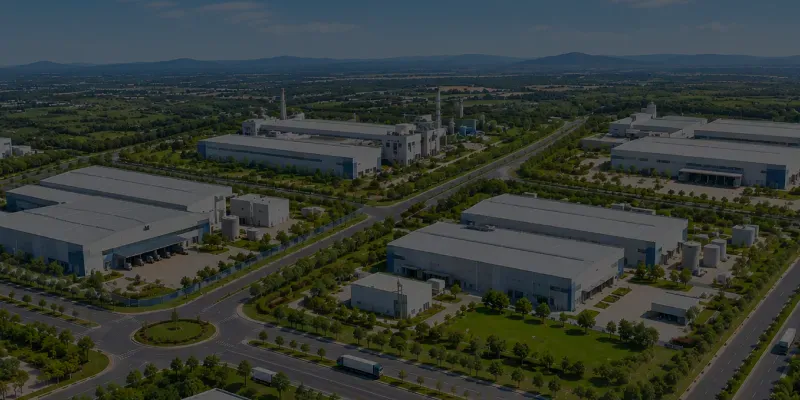
One of Sri City's most distinctive advantages is its multi-zone industrial structure. Instead of following a single industrial development model, it provides specialised zones for export-oriented manufacturing, domestic production, electronics and warehousing.
Special Economic Zone (SEZ)
Sri City's multi-product SEZ is designed for export-oriented manufacturing companies. Its customs-bonded framework and applicable SEZ provisions support businesses involved in international trade and production.
Domestic Tariff Zone (DTZ)
The DTZ caters primarily to manufacturers supplying the Indian domestic market.
Spread across approximately 2,500 acres, the zone is located close to the SEZ. This proximity allows opportunities for backward integration, ancillary manufacturing and supply-chain linkages between businesses operating in different zones.
Free Trade and Warehousing Zone (FTWZ)
The FTWZ is particularly important from a warehousing and logistics perspective.
It is a customs-bonded area designed to cater to trading, logistics and warehousing requirements. Goods intended for both Domestic Tariff Area (DTA) and SEZ units can be stored within this zone, subject to applicable regulations.
Electronics Manufacturing Cluster (EMC)
The EMC is a dedicated area for electronics research and development, design, manufacturing and assembly.
Its specialised focus supports businesses involved in electronics production and creates opportunities for supporting suppliers, component manufacturers and logistics operations.
Together, these four zones give Sri City a structure that accommodates different industrial and supply-chain requirements.
Industrial Infrastructure Designed Around Manufacturing Operations
A manufacturing location must support continuous industrial activity. Production facilities depend on reliable power, water supply, internal transportation and efficient waste management.
Sri City's industrial infrastructure has been developed with these operational requirements in mind.
Road infrastructure:
The industrial park has an internal road network exceeding 50 km. Its arterial roads are 68 metres wide, while primary roads measure 31 and 43 metres. Secondary roads range between 18 and 24 metres, with dedicated road classifications designed to connect different parts of the industrial development.
Power infrastructure:
Power is supplied through APSPDCL, with Sri City providing last-mile connectivity. Its infrastructure includes a 132/33 kV substation and three 33/11 kV substations, supporting the electricity requirements of industrial units.
Water supply:
An internal water treatment plant distributes treated water to industrial units on a 24-hour basis.
Sewage treatment:
The central sewage treatment plant has a planned capacity of 47 MLD. Treated wastewater is recycled for designated uses, including horticulture, landscaping and toilet flushing.
Telecommunications:
Fibre-optic infrastructure and telecom services support the voice, data and connectivity requirements of industrial and commercial businesses.
These facilities are important because manufacturing operations require more than building and production equipment. They need supporting infrastructure that allows factories to function efficiently.
The same infrastructure ecosystem is relevant to warehouses, particularly large industrial facilities that depend on power, digital inventory systems, material-handling equipment and reliable road access.
Dedicated Warehousing and Logistics Facilities at Sri City
One of the strongest reasons Sri City stands out for manufacturing-related logistics is its dedicated Free Trade and Warehousing Zone. Sri City's integrated structure brings these activities closer together.
The FTWZ provides a customs-bonded environment for eligible trading and warehousing activities. Its integration with the SEZ and proximity to the wider industrial ecosystem make it relevant for businesses managing imported materials, traded goods and export-related inventory.
For manufacturers, this can support several operational requirements:
- Storing imported raw materials and components before they are required for production.
- Managing inventory intended for SEZ and domestic operations, subject to applicable regulations.
- Supporting the movement of goods between manufacturing and trading operations.
- Organising storage and distribution activities closer to industrial customers.
- Facilitating logistics operations connected to international trade.
This makes warehousing an integral part of Sri City's industrial proposition rather than simply an additional real estate offering.
Strong Industrial Clusters for Manufacturing and Supply Chains
Another important consideration for companies expanding their manufacturing presence is the surrounding industrial ecosystem.
Sri City's DTZ and SEZ offer an opportunity for businesses to establish operations in proximity to complementary manufacturing activities.
The DTZ's proximity to the SEZ is particularly relevant because the official development framework identifies opportunities for backward integration and supply-chain linkages.
This matters for industries where production depends on a continuous flow of components and materials.
For warehouse operators, proximity to an established industrial customer base can be an important consideration when evaluating location and facility requirements.
Flexible Industrial Spaces to Support Business Expansion
Manufacturing expansion does not always follow the same timeline or infrastructure requirements.
An established company entering a new market may need a large industrial land parcel to develop a customised facility. Another business may prefer a ready-built factory to reduce the time involved in establishing operations.
Sri City provides multiple options, including:
- Industrial land parcels for companies planning to develop their own manufacturing facilities.
- Ready Built Factories (RBFs) for businesses looking for existing industrial buildings.
- Built-to-suit facilities designed around specific business requirements.
- Business and office spaces for supporting commercial operations.
This flexibility allows businesses to evaluate their facility requirements based on production capacity, operational timelines and future expansion plans.
For industrial warehousing businesses, this highlights an important consideration: storage requirements should be planned alongside manufacturing capacity, rather than treated as an afterthought.
Conclusion
Sri City's strategic location along NH-16, access to four seaports, two airports and established road infrastructure make it an attractive manufacturing destination. These connectivity advantages support efficient cargo movement, raw material transportation and access to domestic and international markets, helping businesses manage their supply chain operations more effectively.
Its four specialised zones - SEZ, DTZ, FTWZ and EMC - cater to diverse manufacturing, trade and logistics requirements. This integrated industrial ecosystem allows companies to establish operations based on their production needs while benefiting from proximity to supporting industries and business facilities.
Businesses planning storage facilities alongside manufacturing operations should also consider how to choose the right warehouse location based on connectivity, infrastructure and proximity to industrial customers.
 Address Advisors
Discover all our blogs covering real estate insights, market trends, workspace strategies, and industry updates. Explore expert perspectives and valuable information designed to help you make informed property decisions.
Frequently Asked Questions
Companies choose Sri City for its strategic location along NH-16, access to major seaports and airports, specialised industrial zones, reliable infrastructure and integrated logistics facilities.
Sri City accommodates industries such as electronics, automotive, engineering, food processing, textiles, packaging and other manufacturing sectors, creating a diverse industrial ecosystem.
Sri City has four specialised zones: Special Economic Zone (SEZ), Domestic Tariff Zone (DTZ), Free Trade and Warehousing Zone (FTWZ) and Electronics Manufacturing Cluster (EMC).
Sri City supports warehousing through its dedicated FTWZ, connectivity to major seaports, highways and rail infrastructure. These facilities support storage, cargo movement, trading and distribution activities.
Sri City offers an established internal road network, dedicated power infrastructure, treated water supply, sewage treatment facilities and telecommunications connectivity to support manufacturing and industrial operations.