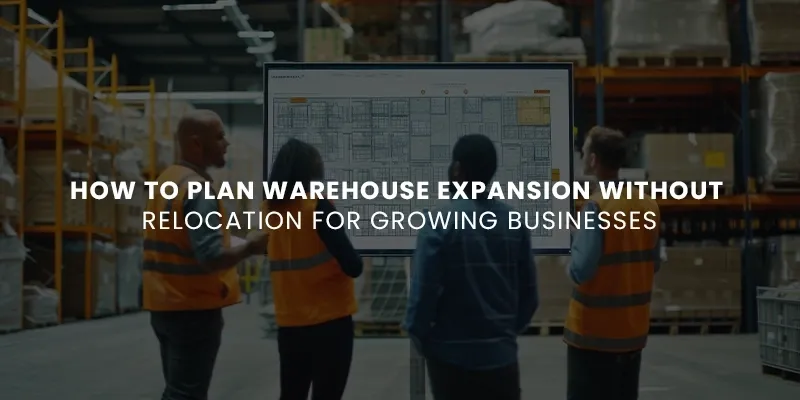
How to Plan Warehouse Expansion Without Relocation for Growing Businesses
Summary
Warehouse expansion without relocation helps growing businesses increase storage capacity without moving to a new facility. By improving warehouse layouts, using vertical storage, managing inventory efficiently, and leasing nearby space, businesses can reduce costs, improve operations, and support future growth.
As a business grows, the need for warehouse space also increases. More orders, higher stock levels, and new products can put pressure on the existing storage space. When a warehouse becomes crowded, daily operations may slow down, and managing inventory can become difficult. Many businesses think moving to a bigger warehouse is the only solution. However, relocation can be expensive, time-consuming, and difficult to manage.
Warehouse expansion without relocation is a practical option for businesses that want to increase storage capacity while continuing to operate from their current location. By improving warehouse layout, using vertical space, upgrading storage systems, and considering nearby rental space, businesses can manage growth without the stress of moving to a new facility.
In this blog, we will explore simple and effective ways to expand warehouse capacity without relocation and explain when renting additional space may be the right choice.
Why Do Growing Businesses Need Warehouse Expansion?
As businesses grow, their storage needs change. A warehouse that was suitable a few years ago may not be enough to handle current operations. More customer orders require more inventory, while seasonal demand may create a temporary need for extra space.
Limited warehouse space can lead to several problems, such as:
- Overcrowded storage areas and blocked walkways.
- Difficulty finding and picking products.
- Delays in packing and shipping orders.
- Poor inventory management.
- Increased risk of damaged goods and workplace accidents.
- Reduced productivity among warehouse staff.
Expanding warehouse capacity helps businesses manage these challenges. However, moving to a new location may involve transportation costs, new lease agreements, equipment installation, and operational delays. This is why many companies first explore ways to increase capacity at their existing warehouse.
Practical Ways to Plan Warehouse Expansion Without Relocation
Growing businesses can increase warehouse capacity without moving to a new location. By improving storage systems, making better use of available space, and planning for future needs, businesses can manage growth more efficiently. Here are some practical ways to expand warehouse capacity.
Review Your Current Warehouse Space
Before planning any expansion, understand how your current warehouse is being used. Some areas may be overcrowded, while other spaces may not be used effectively.
Start by reviewing your storage layout, inventory levels, order movement, and available floor space. Identify areas where products are stored without a clear system or where unused space can be put to better use.
Check which products move quickly and which remain in storage for longer periods. Fast-moving products should be easy to access, while slow-moving items can be placed in less frequently accessed areas, provided they remain safe and accessible.
A proper warehouse assessment helps you understand whether you need a major expansion or simply a better storage arrangement.
Use Vertical Space to Increase Storage Capacity
One of the easiest ways of expanding existing warehouse capacity is to make better use of vertical space. Many warehouses focus mainly on floor space and leave a large amount of overhead space unused.
Installing suitable pallet racking, shelving systems, or other approved storage solutions can help businesses store more goods within the same building.
Before adding taller storage systems, check the warehouse ceiling height, floor load capacity, sprinkler clearance, lighting, and equipment requirements. Make sure the storage system is suitable for the weight and size of your products.
Businesses should assess the available warehouse ceiling height before installing additional racking systems, as sufficient vertical clearance can help increase storage capacity without expanding the warehouse footprint.
Improve Warehouse Layout and Product Placement
Products placed in the wrong areas may require extra movement, making order picking and stock handling less efficient.
A better layout can help you use your existing space more effectively.
Here are a few simple steps to consider:
- Keep fast-moving products close to picking and packing areas.
- Store similar products together for easier identification.
- Maintain clear walkways for workers and material-handling equipment.
- Separate receiving, storage, packing, and dispatch areas where possible.
- Remove unused equipment and damaged storage materials.
A well-organised warehouse allows staff to move products more easily and reduces the time spent searching for inventory.
By improving product placement and movement, businesses can often create more usable space without making major structural changes.
Use Inventory Management Systems
Poor inventory management can make a warehouse feel full even when some products are no longer needed or are stored in the wrong locations.
An inventory management system helps businesses track stock levels, product locations, incoming shipments, and outgoing orders. This information makes it easier to identify slow-moving stock, avoid unnecessary purchases, and plan storage requirements.
For example, if certain products have not moved for several months, the business can review whether those items need to be reordered or stored in large quantities.
Better inventory control supports warehouse expansion without relocation by helping businesses make better use of the space they already have. It also helps managers plan future capacity needs based on actual stock movement rather than estimates.
Organising products according to demand and picking frequency can improve space utilisation. Learn more about warehouse slotting strategies for better inventory placement.
Review Storage Equipment and Handling Methods
The right storage equipment can help businesses store products safely while making better use of available space.
Depending on the type of goods, businesses can consider pallet racks, adjustable shelving, stackable containers, or specialised storage systems. These solutions can help organise products and reduce wasted space between storage units.
It is also important to review how goods move through the warehouse. Suitable material-handling equipment can make it easier to move products between receiving, storage, picking, and dispatch areas.
Before investing in new equipment, consider product dimensions, weight, storage conditions, handling needs, and future business growth.
Choosing suitable equipment can improve warehouse efficiency and help businesses increase storage capacity without relocating.
Consider Additional Warehouse Space for Lease
Sometimes, improving the existing layout is not enough. If inventory continues to grow and the warehouse is already using its available space efficiently, renting extra space may be the next practical step.
Additional warehouse space for lease can help businesses increase storage capacity without moving their main operations to another location.
For example, a business may continue using its current warehouse for daily order processing while renting a nearby facility to store bulk inventory, seasonal goods, or slow-moving products.
Before leasing additional space, consider the following factors:
- Location: Choose a facility close enough to your existing warehouse to support regular movement of goods.
- Rental cost: Compare the rent with the expected savings and business benefits.
- Accessibility: Check road access, loading areas, vehicle movement, and delivery routes.
- Storage facilities: Make sure the space meets your product storage and handling requirements.
- Lease terms: Review the rental period, payment conditions, maintenance responsibilities, and exit clauses.
- Security: Check access control, surveillance, fire safety, and other relevant safety measures.
Renting extra space can offer flexibility, especially when the business needs additional capacity quickly. However, transportation between two facilities and the cost of managing separate locations should also be included in the budget.
Before leasing additional warehouse space, businesses should verify compliance with fire safety norms for warehouse in India to ensure the facility meets applicable fire prevention, emergency access, and safety requirements.
Plan the Expansion Budget Carefully
Warehouse expansion does not always require a large investment, but every change should be planned according to the business budget.
Start by estimating the cost of storage equipment, layout improvements, software, safety upgrades, and any building modifications. If you are considering rental space, include rent, deposits, transport, labour, utilities, and maintenance expenses.
Compare these costs with the expected benefits, such as improved productivity, fewer order delays, better stock control, and the ability to handle more customer orders.
It is also useful to compare the cost of expanding your existing warehouse with the cost of relocating to a new facility.
A clear budget helps you choose a solution that supports business growth without putting unnecessary pressure on cash flow.
Prepare for Future Business Growth
Warehouse expansion should solve current storage problems while also preparing the business for future demand.
Review sales trends, seasonal changes, expected order volumes, and plans to introduce new products. This information can help you estimate how much additional storage space you may need over the next few years.
Avoid expanding based only on current inventory levels. If your business is growing quickly, the space you add today may not be enough in the near future.
A flexible expansion plan may include better storage systems, improved inventory control, and the option to lease additional space when required.
Regular reviews will help you identify capacity problems early and take action before warehouse operations become difficult to manage.
Common Mistakes to Avoid During Warehouse Expansion

While planning warehouse expansion, businesses should avoid a few common mistakes.
- Ignoring safety requirements: Adding storage racks without checking floor capacity, equipment access, and fire safety can create serious risks.
- Expanding without a clear plan: Making changes without reviewing inventory and workflow may lead to wasted space and higher costs.
- Choosing space based only on rent: A cheaper facility may increase transportation costs or create delivery delays.
- Overlooking employee movement: A warehouse must provide enough room for safe movement, picking, loading, and unloading.
- Failing to plan for future needs: An expansion that only addresses today's problems may require further changes sooner than expected.
Careful planning helps businesses avoid unnecessary expenses and make better decisions about warehouse capacity.
Conclusion
Warehouse expansion without relocation allows growing businesses to increase storage capacity while continuing to operate from their existing location. By reviewing the warehouse layout, using vertical space, improving inventory management, and selecting suitable storage equipment, businesses can make better use of their current facility.
When these improvements are not enough, additional warehouse space for lease can provide the extra capacity needed to manage growing inventory and customer demand.
The right approach depends on your available space, budget, storage requirements, and future business plans. By assessing these factors carefully, you can choose a practical expansion strategy that supports business growth, improves daily operations, and reduces the disruption associated with relocating.
 Address Advisors
Discover all our blogs covering real estate insights, market trends, workspace strategies, and industry updates. Explore expert perspectives and valuable information designed to help you make informed property decisions.
Frequenlty Asked Questions
Warehouse expansion without relocation means increasing storage capacity or improving warehouse operations without moving the main business to a new location. It may involve better layouts, vertical storage, improved inventory systems, or renting nearby warehouse space.
A business can increase capacity by using vertical storage, installing suitable racking systems, improving product placement, removing unused items, and managing inventory more effectively. Renting nearby storage space is another option when the existing facility cannot meet demand.
A business should consider additional warehouse space for lease when its current facility is being used efficiently but cannot handle growing inventory. It can also be useful during seasonal demand, business expansion, or periods of increased customer orders.
It can be. Improving an existing warehouse or renting nearby space may reduce moving costs and operational disruption. However, the best option depends on rental prices, available space, building limitations, transportation costs, and long-term business needs.
Businesses should review available space, inventory levels, storage equipment, safety requirements, workflow, budget, and future demand. These checks help them choose an expansion plan that is practical, safe, and suitable for long-term growth.