What Is a Saleable Area in Real Estate? A Complete Guide for Homebuyers

Summary
Saleable area in real estate is the total area for which a buyer is charged, including the carpet area, wall area, balconies or utility spaces, and a proportionate share of common areas such as lifts, lobbies, corridors, and staircases. It is generally larger than the actual usable carpet area.
When you start hunting for a new home, you'll come across several technical terms that determine how much you actually pay and how much space you actually get. One of the most important - and most misunderstood - of these terms is saleable area. Builders use this figure to calculate the final price of a property, yet many homebuyers sign on the dotted line without fully understanding what it means. This guide breaks down everything you need to know about a saleable area, how it's calculated, and why it matters before you invest your hard-earned money.
What Is a Saleable Area?
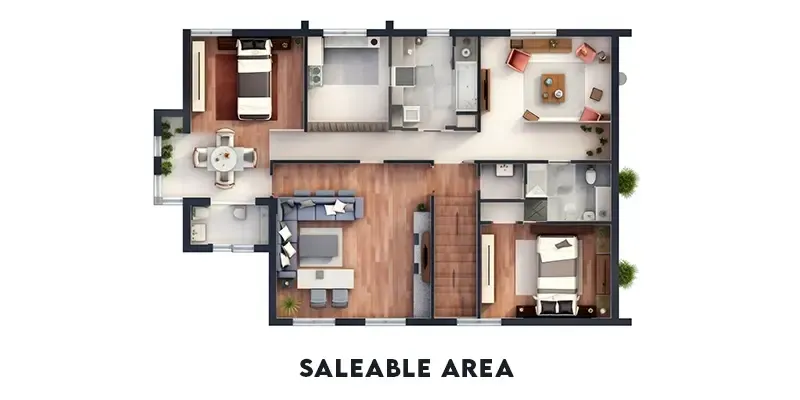
Saleable area refers to the total area of a property on which a builder or developer charges the buyer, including the carpet area, the wall area, and a proportionate share of common spaces like lobbies, staircases, lifts, and corridors.
In simple terms, saleable area is the number used to calculate the final sale price of an apartment or flat. This is why understanding saleable area meaning is crucial for anyone entering the property market - it directly affects your budget and the actual usable space you're paying for.
Unlike carpet area, which is the actual floor space you can walk on inside your home, saleable area includes extra square footage that you don't exclusively own but still pay for. This additional space accounts for shared amenities within the building or society, which is why the saleable area is always larger than the carpet area of any given unit.
How Saleable Area Differs from Other Terms
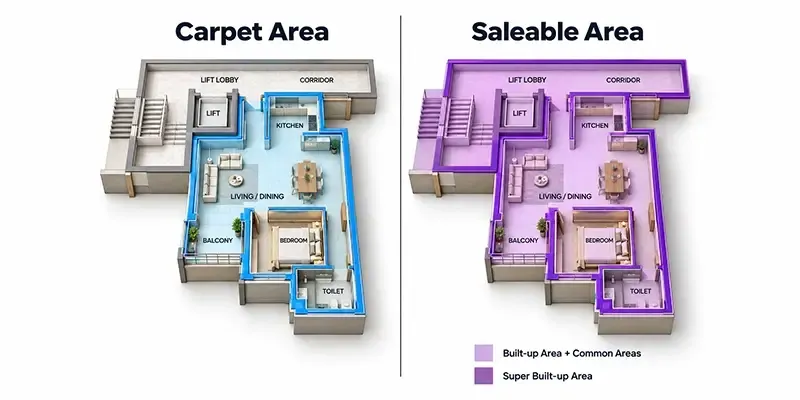
Saleable area is often confused with carpet area, built-up area, and super built-up area, but each measures a different portion of the property. Understanding these terms helps buyers compare properties more accurately and avoid confusion over the actual usable space.
- Carpet Area: This is the net usable floor area within the walls of your apartment, excluding the thickness of internal walls. It's the actual space where you can lay a carpet, hence the name.
- Built-Up Area: This includes the carpet area plus the thickness of the walls and balconies or terraces attached to the unit. It's typically 10-15% more than the carpet area.
- Super Built-Up Area: Also known as saleable area in many parts of India, this includes the built-up area plus a proportionate share of common spaces such as staircases, lift lobbies, corridors, clubhouse, and other shared amenities.
Understanding Carpet Area, Built-up Area, and Super Built-up Area also makes it easier to compare the actual usable space and overall area quoted for a property.
Why Saleable Area Matters for Homebuyers
The concept of saleable area directly impacts your purchase decision in several ways:
- Price Calculation
Most residential and commercial properties are priced based on saleable area. If a builder quotes ₹6,000 per square foot and your saleable area is 1,000 square feet, your total cost comes to ₹60,00,000 - even though your actual usable carpet area might only be 700-750 square feet.
- Loading Factor
The difference between carpet area and saleable area is known as the loading factor or super area loading. This percentage varies from project to project, typically ranging between 20% to 40%, depending on the amenities and common infrastructure provided by the developer. A higher loading factor means you're paying for more shared space, which isn't necessarily bad if the building offers substantial amenities, but it does mean less private usable space for your money.
- Comparing Properties
When comparing two similar properties, simply looking at the price per square foot of saleable area isn't enough. You must also compare the carpet area and loading factor to understand which property actually offers better value for money.
How Is Saleable Area Calculated?
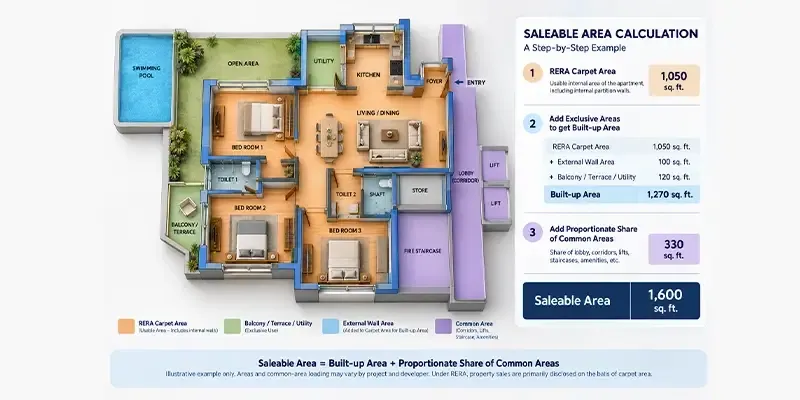
The formula for calculating saleable area is straightforward:
Saleable Area = Carpet Area + Wall Area + Proportionate Share of Common Areas
Here's how developers arrive at this figure, step by step:
Step 1: Measure the carpet area- Start with the carpet area - the net usable floor space inside the walls of the unit, excluding wall thickness. This is the actual area where you could lay a carpet, and it forms the base figure for every other calculation.
Step 2: Add the wall area- Add the thickness of the internal and external walls of the unit to the carpet area. This gives you the built-up area, which is typically 10-15% larger than the carpet area alone.
Step 3: Include balconies and terraces- If the unit has an attached balcony, terrace, or utility area, factor these into the built-up area as well, since developers usually count them (sometimes at 50% weightage) toward the total built-up figure.
Step 4: Calculate the total common area of the building- The developer totals up all shared spaces in the project, including lobbies, staircases, lifts, corridors, clubhouse, garden, and other amenities. Buyers should also understand what is the common area in an apartment, since these shared spaces contribute to the overall saleable area calculation.
Step 5: Divide the common area among all units- This total common area is divided proportionately among all the units in the building, usually based on each unit's built-up area relative to the total built-up area of the project. This gives each buyer their proportionate share of common area.
Step 6: Add the proportionate share to the built-up area- Add this proportionate share of common area to the built-up area of your specific unit. The result is your saleable area - the figure the developer uses to calculate your final purchase price.
Step 7: Verify the loading factor- Divide the difference between saleable area and carpet area by the carpet area to get the loading percentage. For example, an 800 sq ft carpet area with a 1,100 sq ft saleable area gives a loading factor of roughly 37.5%, helping you judge whether the extra cost matches the amenities offered.
For example, if your apartment's carpet area is 800 square feet, the wall area adds another 100 square feet, and your proportionate share of common areas (lobby, staircase, clubhouse, etc.) is 200 square feet, your saleable area would be 1,100 square feet.
Common Misconceptions About Saleable Area
Many first-time buyers assume that saleable area and carpet area are the same thing, leading to disappointment when they discover their actual living space is smaller than expected. Others believe that a higher saleable area automatically means better quality construction or more amenities, which isn't always true. It's essential to evaluate the actual amenities being offered - such as a swimming pool, gym, garden, or clubhouse - against the additional cost you're paying due to the loading factor.
How Address Advisors Can Help
Address Advisors helps homebuyers evaluate properties beyond the quoted price and advertised size. Our team can assist in comparing carpet area, built-up area, saleable area, loading factors, floor plans, and relevant project documents so buyers have a clearer understanding of the actual space and value being offered.
We also help buyers compare multiple projects based on usable area, pricing, location, amenities, and overall suitability, making it easier to make a well-informed property decision before booking.
Conclusion
Understanding what is a saleable area is important when evaluating a property because it directly influences the overall price and the amount of usable space you receive. A larger quoted area does not always mean a larger living space, especially when common areas and other components are included in the calculation.
Before finalizing a property, buyers should compare the carpet area, built-up area, and overall quoted area carefully. Asking the developer for a clear area breakup and checking the figures mentioned in official documents can help avoid confusion later. Along with verifying the area breakup, it is equally important to review the key documents to check before buying a flat from a builder.
This makes it easier to compare different properties, understand the actual value being offered, and make a purchase decision that suits both your budget and space requirements.
 Address Advisors
Discover all our blogs covering real estate insights, market trends, workspace strategies, and industry updates. Explore expert perspectives and valuable information designed to help you make informed property decisions.
Frequently Asked Questions
Carpet area is the actual usable floor space inside your unit's walls, while saleable area includes carpet area plus wall thickness and a proportionate share of common building spaces.
Builders include shared amenities like lobbies, staircases, and clubhouses in the price, so saleable area reflect the cost of both private space and communal infrastructure buyers benefit from
A loading factor between 20-30% is generally considered reasonable. Anything above 40% means you're paying significantly more for common areas relative to your actual usable space.
Yes, RERA mandates that developers disclose carpet area clearly in agreements, though many still advertise and initially quote prices using saleable or super built-up area figures.
Request a detailed area breakdown in writing, hire an independent surveyor to measure the unit, and cross-check the figures against the project's RERA registration documents.