Retail Warehousing Explained: How It Works, Benefits & Challenges
Retail warehousing is a specialized facility that stores, manages, and distributes products intended for retail sale. It ensures fast replenishment of stores, accurate inventory tracking, and efficient order fulfillment. Key components include advanced inventory management, organized layouts, automation, and reverse logistics. While retail warehousing offers benefits like faster delivery, better product availability, and improved supply chain efficiency, challenges such as demand fluctuations, high SKU volumes, limited space, and returns management must be addressed.
Retail warehousing plays a crucial role in ensuring the smooth flow of goods from suppliers to retail stores and ultimately to customers. As consumer expectations rise, the need for fast replenishment, accurate inventory control, and streamlined order fulfillment has made retail warehousing more important than ever. This guide explains what retail warehousing means, how it works, the key components that make it efficient, and the challenges and benefits businesses need to know.
Retail Warehouse Definition
A retail warehouse is a specialized facility used for storing, managing, and distributing products specifically meant for retail sale. These warehouses support high SKU volumes, fast-moving inventory, and frequent stock rotation. Unlike traditional bulk storage warehouses, retail warehouses are designed for speed, efficiency, and accuracy, ensuring that shelves in retail stores are always stocked and customers receive their orders on time.
Retail warehouses act as the central hub of the retail supply chain by receiving goods from manufacturers, storing them systematically, and dispatching them quickly based on demand. In the era of e-commerce and omnichannel retailing, retail warehouses also handle online order fulfillment and returns, making them an essential part of modern retail operations.
Key Components of Effective Retail Warehousing
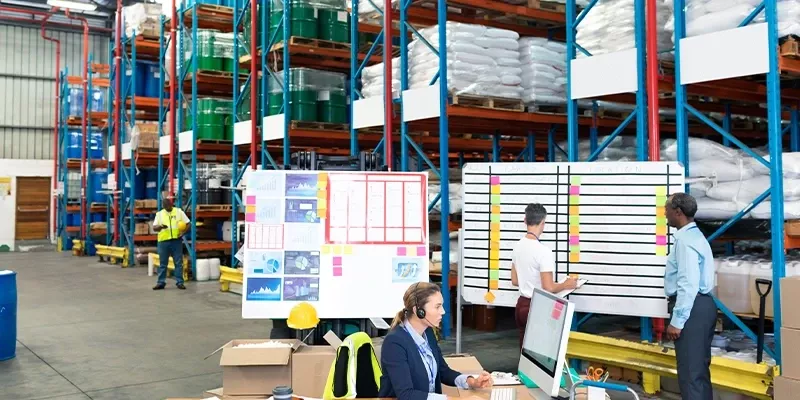
To run efficiently, a retail warehouse must include several core components that work together to maintain speed and accuracy:
1. Advanced Inventory Management
Accurate, real-time inventory tracking is the backbone of retail warehousing. A Warehouse Management System (WMS) helps track stock levels, forecast demand, automate replenishment, and reduce errors. Without strong inventory control, retail operations can face stockouts, overstocking, or misplacement of items.
2. Organized Warehouse Layout
A well-planned layout supports faster picking and replenishment. Retail warehouses use categorized storage zones, clear labeling, optimized shelving, and picking paths to improve navigation for workers. A logical layout reduces travel time, minimizes confusion, and increases overall productivity.
3. Efficient Order Processing
Retail warehouses must process thousands of orders quickly and accurately. This includes receiving goods, quality checks, picking, packing, labeling, and dispatching. Efficient order processing ensures that retail stores remain stocked and that e-commerce customers receive orders on time.
4. Use of Technology and Automation
Automation significantly improves accuracy and speed in retail warehousing. Tools like barcode scanners, handheld RFID systems, automated conveyors, sorting machines, and robotic picking systems reduce manual labor and human error. Technology also enhances visibility, enabling companies to monitor performance and make informed decisions.
5. Reverse Logistics Systems
Retail generates a high volume of returns, especially in e-commerce. An effective reverse logistics system ensures quick processing, inspection, restocking, or disposal of returned goods. Efficient returns management reduces operational disruptions and ensures products move back into inventory quickly.
Benefits of Retail Warehousing
Implementing efficient retail warehousing brings several operational and financial advantages for businesses:
- Faster Store Replenishment: Retail warehouses ensure that stores receive stock quickly, preventing empty shelves and lost sales. Faster replenishment improves customer satisfaction and supports brand loyalty.
- Improved Product Availability: With real-time tracking and efficient storage, retailers can maintain consistent inventory levels across multiple locations. This helps ensure that customers find the products they need when they need them.
- Reduced Stockouts and Overstocks: Accurate forecasting and inventory visibility help retailers balance supply and demand effectively. This reduces the chances of running out of stock or carrying excessive inventory.
- Enhanced Supply Chain Efficiency: Retail warehouses streamline the flow of goods from suppliers to stores. This improves operational efficiency, minimizes delays, and reduces unnecessary transportation costs.
- Better Seasonal Demand Management: Retail warehouses are equipped to handle spikes in demand during festive seasons, sales events, or promotions. They allow businesses to store additional inventory and distribute it efficiently during peak periods.
Challenges in Retail Warehousing
Despite its advantages, retail warehousing comes with several challenges that businesses must address:
- Demand Uncertainty: Retail demand can fluctuate drastically due to trends, seasons, or market conditions. Unpredictable demand makes forecasting more complex and impacts inventory planning.
- High SKU Volumes: Retail operations handle a wide range of products, leading to high SKU diversity. Managing large product ranges requires precise organization and inventory control.
- Limited Space: Retail warehouses need to store many products within limited space. Poor space utilization can cause congestion, slow operations, and reduce efficiency.
- High Operational Costs: Labor, equipment, technology, and error-free fulfillment contribute to rising operational expenses. Businesses must balance quality service with cost control.
- Returns Management: Handling returns is time-consuming and requires specialized processes. Inefficient returns management can cause inventory inaccuracies and operational delays.
Conclusion
Retail warehousing is at the heart of efficient retail operations. It ensures products move seamlessly from suppliers to stores while maintaining high availability and fast order fulfillment. Although challenges like demand fluctuations, high SKU counts, and operational costs exist, businesses can overcome them through strong inventory systems, organized layouts, and automation.
A well-managed retail warehouse strengthens the entire retail supply chain, enhances customer satisfaction, and supports long-term business growth. If you need help selecting or optimizing retail warehouse space, experts like Address Advisors can guide you with the right strategies and locations tailored to your retail needs.
Frequently Asked Questions
Retail warehousing is the storage and management of inventory specifically for retail purposes, ensuring timely supply to stores or direct-to-customer deliveries.
Effective retail warehouses include accurate inventory management, organized storage layouts, efficient order processing, automation, and reverse logistics handling.
Benefits include faster replenishment, improved product availability, reduced stockouts and overstocks, enhanced supply chain efficiency, and better management of seasonal demand.
Challenges include fluctuating demand, high SKU diversity, limited storage space, operational costs, and returns management.
Address Advisors helps businesses select and optimize retail warehouse spaces, ensuring efficient operations, strategic inventory placement, and smooth supply chain performance.