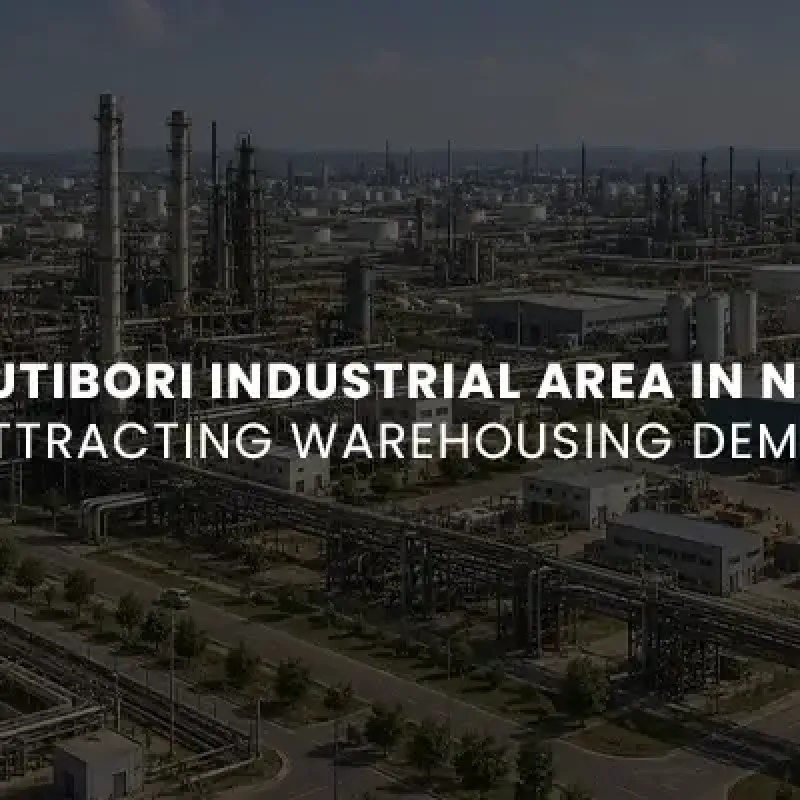
How Peripheral Business Districts Are Changing CRE

Summary
Peripheral Business Districts (PBDs) are decentralized commercial zones located on the outer edges of major Indian cities that offer lower rentals, larger floor plates, and modern infrastructure compared to congested city-centre business hubs. Driven by rising CBD costs and IT/ITeS expansion, PBDs such as Whitefield, Hinjewadi, and OMR have become preferred office destinations, fundamentally reshaping occupier decisions across India's commercial real estate landscape.
India’s commercial real estate landscape is gradually shifting away from a CBD-only model. Rising rentals, limited expansion space, and growing pressure on central locations are encouraging companies to explore office markets on the city periphery, where larger developments and newer infrastructure offer more flexibility.
This shift has helped Peripheral Business Districts such as Whitefield, Hinjewadi, OMR, and Gachibowli emerge as established commercial hubs rather than secondary alternatives. For occupiers and investors, these locations now play a bigger role in decisions around office cost, scalability, connectivity, talent access, and long-term growth.
Peripheral Business District Meaning in Commercial Real Estate
A Peripheral Business District meaning, in real estate terms, refers to a commercial micro-market situated beyond a city's traditional core, typically along outer ring roads, expressways, or IT corridors.
Unlike Central Business Districts (CBDs), which sit in the historic commercial heart of a city, PBDs developed organically as land in city centres grew scarce and expensive. Cities like Bengaluru, Pune, Chennai, and Hyderabad have all seen large-scale office development shift toward their peripheries over the past two decades.
- Located along outer ring roads or highways
- Anchored by IT parks and business campuses
- Supported by newer metro, road, or expressway links
- Offer larger contiguous land parcels for development
- Attract both domestic and multinational occupiers
The Peripheral Business District meaning has evolved further in recent years - PBDs are no longer just cost-saving alternatives but self-sufficient business ecosystems with their own retail, residential, and social infrastructure.
Reasons Companies Are Shifting to Peripheral Business Districts
Companies are shifting operations to Peripheral Business Districts primarily because of significantly lower rentals, availability of large Grade A floor plates, and easier access to a growing talent pool near residential catchments.
Occupier demand for PBD in commercial real estate has surged as businesses reassess long-term real estate strategy. Rental arbitrage between CBDs and PBDs can range from 30% to 50% in most metro markets, making peripheral locations financially attractive for large-scale leasing.
- Lower per-square-foot rental and CAM charges
- Larger, contiguous floor plates suited to campus-style operations
- Proximity to affordable residential catchments for employees
- Better parking and infrastructure planning than older CBDs
- Scope for future expansion within the same business park
This shift is particularly visible among IT/ITeS firms, GCCs (Global Capability Centres), and BFSI occupiers, all of whom prioritize scalability over prestige addresses.
This is especially visible in Bengaluru, where the Whitefield vs Marathahalli comparison highlights how pricing and connectivity shape office-location decisions.
PBDs Versus Traditional CBDs: A Comparison
Peripheral Business Districts generally offer better value and scalability than CBDs, while CBDs retain advantages in prestige, connectivity, and access to established client networks.
The comparison between a Peripheral Business District and a CBD isn't simply about cost - it's about matching real estate strategy to business priorities. A financial services firm that depends on client walk-ins may still prefer a CBD address, while a technology company running back-office or engineering operations often finds a PBD more efficient.
|
Parameter |
CBD |
PBD |
|
Rental Cost |
High |
Moderate to low |
|
Floor Plate Size |
Limited |
Large, campus-style |
|
Connectivity |
Central, established |
Improving, highway-linked |
|
Parking Availability |
Constrained |
Generous |
|
Expansion Scope |
Minimal |
Significant |
This trade-off explains why many large occupiers now maintain a hybrid footprint - a small CBD presence for brand visibility and a larger PBD campus for core operations.
India's Leading Peripheral Business Districts
India's leading Peripheral Business Districts include Whitefield and Outer Ring Road in Bengaluru, Hinjewadi in Pune, OMR (Old Mahabalipuram Road) in Chennai, and Gachibowli-Financial District in Hyderabad.
Each of these micro-markets has matured into a self-contained commercial hub with its own Grade A supply pipeline, retail catchments, and residential ecosystems.
- Whitefield, Bengaluru – Established IT hub with strong Grade A supply and metro connectivity
- Hinjewadi, Pune – Hinjewadi commercial real estate continues to grow on the back of IT demand and improving infrastructure.
- OMR, Chennai – India's largest IT corridor, home to major GCC campuses
- Gachibowli, Hyderabad – Rapidly growing financial and technology district
- Noida Expressway, NCR – Emerging PBD benefiting from improved road
Key Challenges of Investing in PBDs
The main challenges of investing in Peripheral Business Districts include traffic congestion during peak hours, uneven social infrastructure development, and dependence on the pace of government-led connectivity projects.
While PBDs offer strong long-term value, occupiers and investors need to factor in market-specific risks before committing to a location.
- Peak-hour commute delays on approach roads
- Uneven pace of social infrastructure (retail, hospitality, healthcare)
- Dependency on planned metro or expressway timelines
- Oversupply risk in select micro-markets with aggressive development
- Variability in facility management quality across business parks
Careful due diligence on a specific PBD's infrastructure roadmap - rather than treating all peripheral markets as equivalent - is essential to avoid these pitfalls.
Future Outlook for Peripheral Business Districts
The future outlook for Peripheral Business Districts remains strong, with continued growth expected as GCC expansion, flexible workspace demand, and infrastructure investment converge across India's top metros.
Analysts tracking PBD in commercial real estate expect these districts to absorb a growing share of India's office leasing activity over the next five years, particularly as Tier 1 cities push further outward and Tier 2 cities develop their own peripheral corridors.
- Continued GCC and MNC expansion into established PBDs
- Rise of flexible and managed workspace operators in peripheral markets
- New PBDs emerging in Tier 2 cities like Coimbatore and Nagpur
- Sustainability-focused, green-certified developments gaining preference
- Government-backed infrastructure projects accelerating peripheral connectivity
As connectivity improves and social infrastructure catches up, the distinction between peripheral and central is likely to blur further, with PBDs increasingly seen as primary - not secondary - commercial destinations. The growth of the OMR office space market also shows how peripheral corridors can evolve into established commercial hubs.
How Address Advisors Can Help
Address Advisors helps businesses identify the right office location across key Peripheral Business Districts by comparing rentals, connectivity, Grade A supply, and growth potential. Our market expertise helps occupiers and investors make informed commercial real estate decisions.
Conclusion
Peripheral Business Districts have moved well beyond their origins as low-cost alternatives to city centres - they are now central to how occupiers in India plan real estate strategy. The combination of larger floor plates, lower rentals, and steadily improving infrastructure has made PBDs like Whitefield, Hinjewadi, OMR, and Gachibowli natural homes for IT/ITeS firms, GCCs, and BFSI occupiers looking to scale efficiently. While challenges around commute times, uneven social infrastructure, and connectivity timelines remain, the trajectory is clear: as metro extensions and expressway projects mature, PBDs will continue absorbing a growing share of India's commercial leasing activity. For occupiers and investors alike, understanding the Peripheral Business District meaning and its evolving role is no longer optional - it's a core input into any sound commercial real estate decision in India's metro and emerging Tier 2 markets.
 Address Advisors
Discover all our blogs covering real estate insights, market trends, workspace strategies, and industry updates. Explore expert perspectives and valuable information designed to help you make informed property decisions.
Frequently Asked Questions
A Peripheral Business District refers to a commercial hub located outside a city's traditional core, typically along ring roads or highways with lower rentals.
A PBD offers lower costs and larger floor plates than a CBD, while a CBD provides central location, prestige, and established connectivity.
Whitefield and ORR in Bengaluru, Hinjewadi in Pune, OMR in Chennai, and Gachibowli in Hyderabad are India's leading Peripheral Business Districts today.
Companies prefer PBDs for lower rentals, larger campuses, better parking, and proximity to affordable residential catchments for their employees.
Yes, PBDs with strong infrastructure roadmaps and GCC-driven demand typically offer solid long-term rental growth and capital appreciation potential.
Investors should evaluate traffic congestion, social infrastructure maturity, and dependence on planned connectivity projects before committing capital to a PBD.