Climate-Controlled vs Temperature-Controlled Warehouse: Key Differences, Benefits & Future Trends
Climate-controlled and temperature-controlled warehouses both protect products, but they operate differently. Climate-controlled facilities regulate temperature, humidity, and air quality, making them ideal for sensitive goods like electronics and pharmaceuticals. Temperature-controlled warehouses focus solely on maintaining a set temperature for perishables and frozen items. With growing demand for specialized storage, innovations like IoT monitoring, AI maintenance, and sustainable climate systems are shaping the future of advanced warehousing.
In the world of supply chain and logistics, storage conditions play a critical role in maintaining product quality, preventing spoilage, and meeting compliance requirements. As industries like pharmaceuticals, FMCG, e-commerce, food, electronics, and cosmetics continue to expand, the demand for specialized storage environments has grown significantly. Two of the most commonly used storage options are climate-controlled warehouses and temperature-controlled warehouses. Although the terms are often used interchangeably, they serve different purposes and offer distinct advantages.
This article explores the difference between climate-controlled and temperature-controlled warehouses, their benefits, importance, and emerging trends shaping the future of advanced storage solutions.
What Is a Climate-Controlled Warehouse?
A climate-controlled warehouse maintains a stable environment by regulating temperature, humidity, and air quality. This type of storage is ideal for products sensitive not only to heat or cold but also to moisture and atmospheric changes.
Products Stored in Climate-Controlled Warehouses:
- Pharmaceuticals
- Electronics & semiconductors
- Artwork & antiques
- Premium food products
- Cosmetic and skincare products
- Leather and wooden goods
Climate-controlled warehouses provide a multi-layered protection system, ensuring products remain safe from external environmental fluctuations.
What Is a Temperature-Controlled Warehouse?
A temperature-controlled warehouse focuses solely on controlling temperature, without managing humidity or air quality. These spaces are designed to keep products within a defined temperature range, ensuring they do not degrade, melt, freeze, or spoil.
Products Stored in Temperature-Controlled Warehouses:
- Frozen foods
- Fresh produce
- Flowers & plants
- Dairy products
- Beverages
- Certain chemicals
Temperature-controlled warehousing is essential for industries with strict cold chain requirements.
Difference Between a Climate-Controlled Warehouse and a Temperature-Controlled Warehouse
|
Feature |
Climate-Controlled Warehouse |
Temperature-Controlled Warehouse |
|
Controls |
Temperature + humidity + air quality |
Only temperature |
|
Ideal For |
Sensitive products like electronics, pharma, artwork |
Food, frozen goods, beverages |
|
Equipment Used |
HVAC, dehumidifiers, air purifiers |
Chillers, freezers, refrigerating systems |
|
Cost |
Higher operating cost |
Moderately lower |
|
Use Cases |
Long-term storage of delicate items |
Cold chain and perishable storage |
The core difference lies in the level of environmental control provided. Climate-controlled warehouses offer holistic protection, while temperature-controlled facilities focus only on temperature stability.
Benefits of a Climate-Controlled Warehouse
1. Protection From Moisture & Humidity Fluctuations
Humidity can damage electronics, artwork, paper materials, and pharmaceuticals. Climate control eliminates the risk.
2. Reduced Risk of Mold, Mildew & Bacteria Growth
Perfect for medical supplies, organic goods, and perishable items needing high hygiene standards.
3. Long-Term Product Preservation
Climate control ensures product integrity over extended storage periods, especially for high-value items.
4. Better Air Quality
Air filtration systems protect goods from dust, pollutants, and airborne contaminants.
5. Ideal for Sensitive Supply Chains
Industries requiring strict compliance benefit from stable conditions that meet regulatory standards.
Importance of Climate-Controlled Warehouses
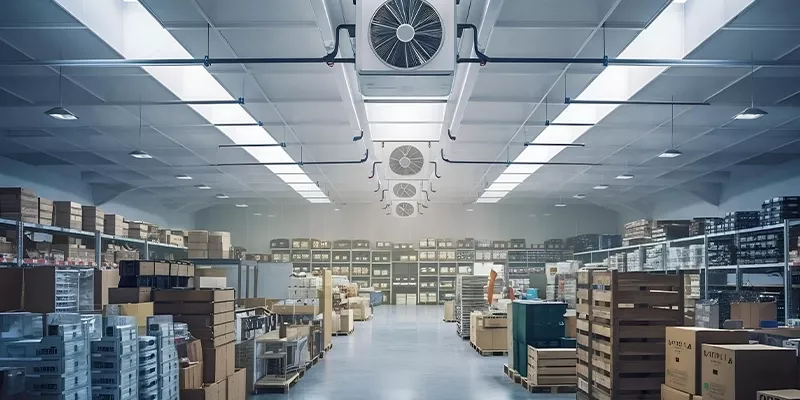
Climate-controlled facilities are critical for:
- Maintaining product quality
- Ensuring regulatory compliance
- Supporting pharmaceutical & biotech logistics
- Preventing costly damage or spoilage
- Enabling long-distance or long-duration storage
In industries where environmental stability is non-negotiable, climate-controlled warehouses are essential for operational efficiency and product safety.
Future Trends in Climate-Controlled Warehousing
The warehousing industry is upgrading rapidly with new technologies and automation. Key future trends include:
1. IoT & Real-Time Monitoring
Sensors track humidity, temperature, and air quality with instant alerts for deviations.
2. AI-Powered Predictive Maintenance
AI forecasts equipment failures, preventing disruptions in climate control systems.
3. Sustainable Climate Control Solutions
Solar-powered HVAC, eco-friendly refrigerants, and energy-efficient insulation are becoming standard.
4. Robotics & Automation
Automated picking reduces the need for human presence in sensitive areas, improving consistency.
5. Smart Warehousing Integration
Climate-controlled systems integrate with WMS for seamless environmental tracking and supply chain visibility.
These innovations are making advanced warehouses more efficient, sustainable, and future-ready.
Conclusion
Climate-controlled and temperature-controlled warehouses serve different storage needs—while temperature-controlled spaces regulate heat levels, climate-controlled facilities also manage humidity and air quality for sensitive, high-value goods. As storage demands become more advanced, choosing the right facility is essential for product safety and operational efficiency. Address Advisors can help you find the ideal warehouse solution based on your product requirements, budget, and long-term logistics goals.
A climate-controlled warehouse regulates temperature, humidity, and air quality to protect sensitive products.
It controls only temperature, making it suitable for perishables and cold-chain goods.
It prevents damage from heat, moisture, and air quality fluctuations.
IoT monitoring, AI maintenance, automation, and sustainable cooling solutions.
Absolutely, SMEs benefit greatly as they can cut down on the initial cost of warehousing and increase inventory according to the current demand.