Can a Warehouse Be Used as a Factory? Rules, Permissions & Requirements Explained
Converting a warehouse into a factory is possible, but only after meeting specific legal, zoning, and safety requirements. Manufacturing activities require land-use approval, a factory license, pollution control clearance, structural upgrades, and compliance with the Factories Act. Without proper permissions, operating production inside a warehouse becomes illegal and unsafe.
Many businesses consider using a warehouse as a factory to save costs, speed up setup, or utilize existing space. While this may seem practical, warehouses and factories serve different legal and operational purposes, and converting a warehouse into a factory requires specific approvals and compliance with industrial laws.
Below is a detailed guide on warehouse-to-factory conversion rules, licenses required, and the permissions you must obtain before starting manufacturing activities.
Can a Warehouse Be Used as a Factory?
In simple terms, yes; a warehouse can be used as a factory, but only after obtaining the proper licenses, approvals, and zoning permissions.
A regular warehouse cannot legally operate as a manufacturing unit unless it complies with the Factories Act, fire safety norms, building structural requirements, and pollution control regulations.
Manufacturing involves machinery, labor safety, emissions, and increased power usage—none of which a standard warehouse is set up to handle without modifications.
Warehouse to Factory Conversion Rules
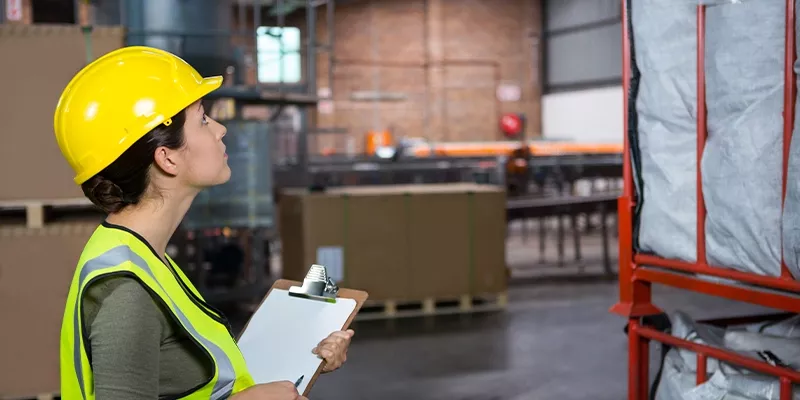
If you plan to convert a warehouse into a factory, you must follow these essential rules:
1. Land Use Approval (Zoning Change)
The warehouse land must be approved for manufacturing/industrial use.
If not, you need to apply for:
- Land-use conversion
- Change in building occupancy type (from storage to industrial)
2. Compliance With the Factories Act, 1948
Any building used for manufacturing with:
- 10+ workers (with power) or
- 20+ workers (without power) must register under the Factories Act.
You may need:
- Factory license
- Approval of building layout
- Safety inspections
3. Structural and Fire Safety Requirements
A warehouse must be upgraded to meet factory-level requirements such as:
- Fire NOC
- Emergency exits
- Ventilation & exhaust systems
- Structural stability certificate
- Electrical load approval
4. Pollution Control Board Approval
If the manufacturing process generates:
- Waste
- Emissions
- Noise
- Chemical discharge
Then you must get:
- CTE (Consent to Establish)
- CTO (Consent to Operate) from the State Pollution Control Board.
5. Additional Permissions
Depending on your industry, you may also need:
- Boiler permissions
- Hazardous material handling approval
- Labour department registration
- Power load enhancement certificate
Do I Need a Factory License for a Warehouse?
Yes. If you plan to start any form of manufacturing, you must obtain a Factory License under the Factories Act. Even small-scale assembly, packaging, or processing activities may require approval if they involve:
- Power-operated machinery
- Multiple workers
- Cotinuous production processes
Without a factory license, operations are considered illegal and can attract penalties, closure notices, or compliance actions.
What Permissions Are Required for Factory Use?
Below is a simplified checklist of all permissions needed to convert a warehouse into a factory:
|
Requirement |
Needed? |
|
Land-use conversion to industrial |
✔️ |
|
Factory license |
✔️ |
|
Fire NOC (Factory category) |
✔️ |
|
Structural stability certificate |
✔️ |
|
Pollution controL (CTE/CTO) |
✔️ |
|
Electrical load approval |
✔️ |
|
Labour department registration |
✔️ |
|
Building plan approval |
✔️ |
The exact requirements vary depending on the state and the type of industry involved.
Conclusion
A warehouse can be used as a factory, but only after obtaining the required licenses, safety approvals, pollution control clearances, and land-use permissions. Operating manufacturing activities in a regular warehouse without approval is illegal and unsafe.
If you are unsure about compliance, location suitability, or conversion costs, consulting experts is essential.
Address Advisors, a leading industrial real estate advisory firm, helps businesses find the right industrial spaces and guides them through compliance, conversion feasibility, and state regulations ensuring your facility is safe, legal, and ready for operations.
Frequently Asked Questions
Yes, but only after obtaining industrial zoning approval, factory licensing, and safety clearances.
Yes, any manufacturing activity requires a valid factory license under the Factories Act.
You need land-use conversion, fire NOC, pollution control approval, and layout approval.
Yes, manufacturing units require CTE and CTO from the Pollution Control Board.
Address Advisors provides expert guidance in choosing legal, compliant industrial and manufacturing properties.