What Are Automatic Warehouse Pallets? Functions, Advantages & Cost Insights
Automatic warehouse pallets are engineering-grade pallets designed to support modern automation systems like AS/RS, conveyors, and robotic forklifts. They provide dimensional consistency, high durability, and improved load stability, enabling faster movement, fewer errors, enhanced safety, and greater storage density. Although automated storage systems have higher per-pallet storage costs, they deliver long-term savings through reduced labor dependence and increased productivity.
Modern warehouses are shifting rapidly from manual handling to automated systems to meet increasing demand for speed, accuracy, and cost efficiency. One important innovation in this transformation is the use of automatic warehouse pallets; intelligent, standardized platforms designed to work seamlessly with automated storage, retrieval, and material-handling systems.
Automatic pallets are more than simple wooden or plastic platforms. They are engineered for precision, uniformity, and mechanical compatibility, enabling warehouses to operate faster, safer, and with fewer labor-intensive tasks. This makes them a critical component in smart and high-tech warehousing environments.
What Are Automatic Warehouse Pallets?
Automatic warehouse pallets are specialized pallets designed to integrate with automation technologies such as conveyors, Automated Storage and Retrieval Systems (AS/RS), pallet shuttles, robotic forklifts (AGVs/AMRs), and automated palletizers.
Unlike regular pallets, automatic pallets offer:
- Consistent dimensions
- High structural strength
- Compatibility with robotic equipment
- Smooth, stable surfaces for precise movement
- Built-in features to support scanning and tracking
These pallets improve warehouse efficiency by eliminating manual intervention and ensuring seamless machine-to-machine handling.
Function of Automatic Warehouse Pallets
Automatic warehouse pallets play several key roles in an automated storage setup:
- Smooth Movement on Automated Systems: They are designed to glide easily on conveyors, lifters, turntables, and AS/RS cranes without slipping or tilting.
- Load Stability for Robotics: Their structure ensures that robotic forklifts and shuttles can lift, move, and store goods safely, minimizing drops or damage.
- Space Optimization: Because of consistent sizing, AS/RS racks and pallet locations can be optimized for maximum storage density.
- Tracking & Inventory Accuracy: Many automatic pallets include barcodes, RFID tags, or embedded sensors for real-time visibility in WMS (Warehouse Management System).
- Reduced Human Error: Automation-compatible pallets eliminate common mistakes like misplacement, pallet misalignment, and unstable stacking.
Advantages of Automatic Warehouse Pallets
Using automatic warehouse pallets offers several operational and financial benefits:
- Faster Material Handling: Automated equipment can move these pallets significantly faster than manual operations, reducing turnaround time.
- Lower Labor Costs: Automation reduces dependence on manual labor for lifting, stacking, and transporting pallets inside the warehouse.
- Higher Safety Standards: Fewer touches mean lower risk of workplace injuries caused by heavy lifting, dropping goods, or pallet-related accidents.
- Improved Accuracy and Consistency: Because every pallet is uniform, automated systems perform with greater precision, resulting in fewer errors and smoother workflows.
- Longer Lifespan: Automatic pallets are typically made from high-quality plastic or composite materials, making them more durable than traditional wooden pallets.
- Enhanced Hygiene and Compliance: These pallets are easy to clean, making them ideal for industries like pharmaceuticals, food processing, and electronics.
- Better Space Utilization: Their dimension accuracy means more pallets can be stored efficiently in AS/RS racks and automated storage systems.
Advantages of Automatic Warehouse Pallets
Storage cost per pallet varies based on warehouse type and automation level. While using automatic pallets may involve a higher upfront investment, the operational savings are significant.
Typical storage cost per pallet (India averages):
|
Warehouse Type |
Cost per Pallet per Month |
|
Traditional Warehouse |
₹150 – ₹350 |
|
Semi-Automated Warehouse |
₹300 – ₹600 |
|
Fully Automated (AS/RS) Warehouse |
₹500 – ₹900 |
Future of Automatic Warehouse Pallets
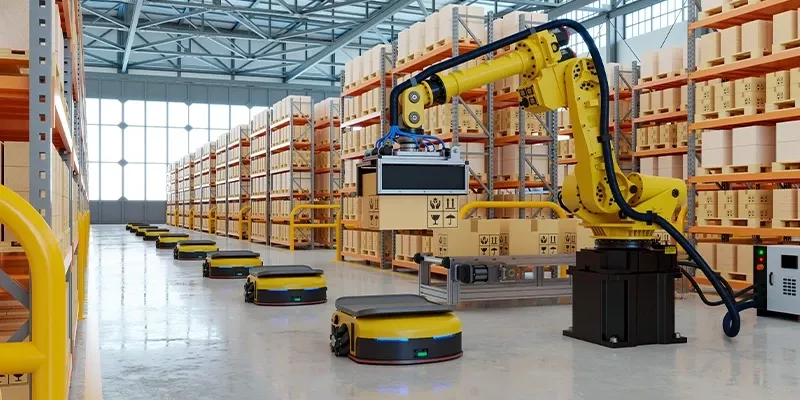
As warehouses adopt AI, robotics, and digital automation, automatic pallets will become even more advanced. Trends include:
- Embedded RFID and smart sensors
- Lightweight but strong materials
- IoT-enabled pallets for real-time condition monitoring
- Integration with fully autonomous drones and bots
- Sustainability-driven pallet designs
Automation is no longer optional for high-performance logistics, automatic pallets are at the core of this transformation.
Conclusion
Automatic warehouse pallets play a crucial role in modern, automated storage systems by offering precision, durability, and seamless compatibility with AS/RS, conveyors, shuttles, and robotic handling equipment. They help businesses reduce labor costs, improve accuracy, enhance safety, and optimize pallet storage density, making them essential for future-ready supply chains.
If your business is exploring automation or looking for warehousing spaces optimized for advanced pallet-handling systems, Address Advisors can help. As a leading industrial and warehousing real estate advisory firm, they assist businesses in finding high-performance, automation-ready facilities tailored to operational needs, budget, and long-term scalability.
Frequently Asked Questions
They are precision-engineered pallets designed for automated systems like AS/RS, conveyors, and robotic forklifts.
They offer exact dimensions, higher durability, and automation-friendly features like smooth surfaces and RFID tags.
E-commerce, FMCG, pharma, electronics, automotive, cold chain, and 3PL logistics.
Yes, automation cuts labor, speeds operations, reduces damage, and improves storage efficiency.
Address Advisors helps businesses find warehouses designed for automated pallet systems.